
Since this was not our first visit to Vienna, I did not feel any pressure to tick off the major tourist sights. We were there to visit our daughter, who lives in Vienna, and we were fortunate to follow her recommendations.
You can follow our trip through my Google Maps list of Vienna, which includes links to all the places we visited: https://maps.app.goo.gl/xEEiNhvSCaiPdyPd7?g_st=ac
Wien Museum
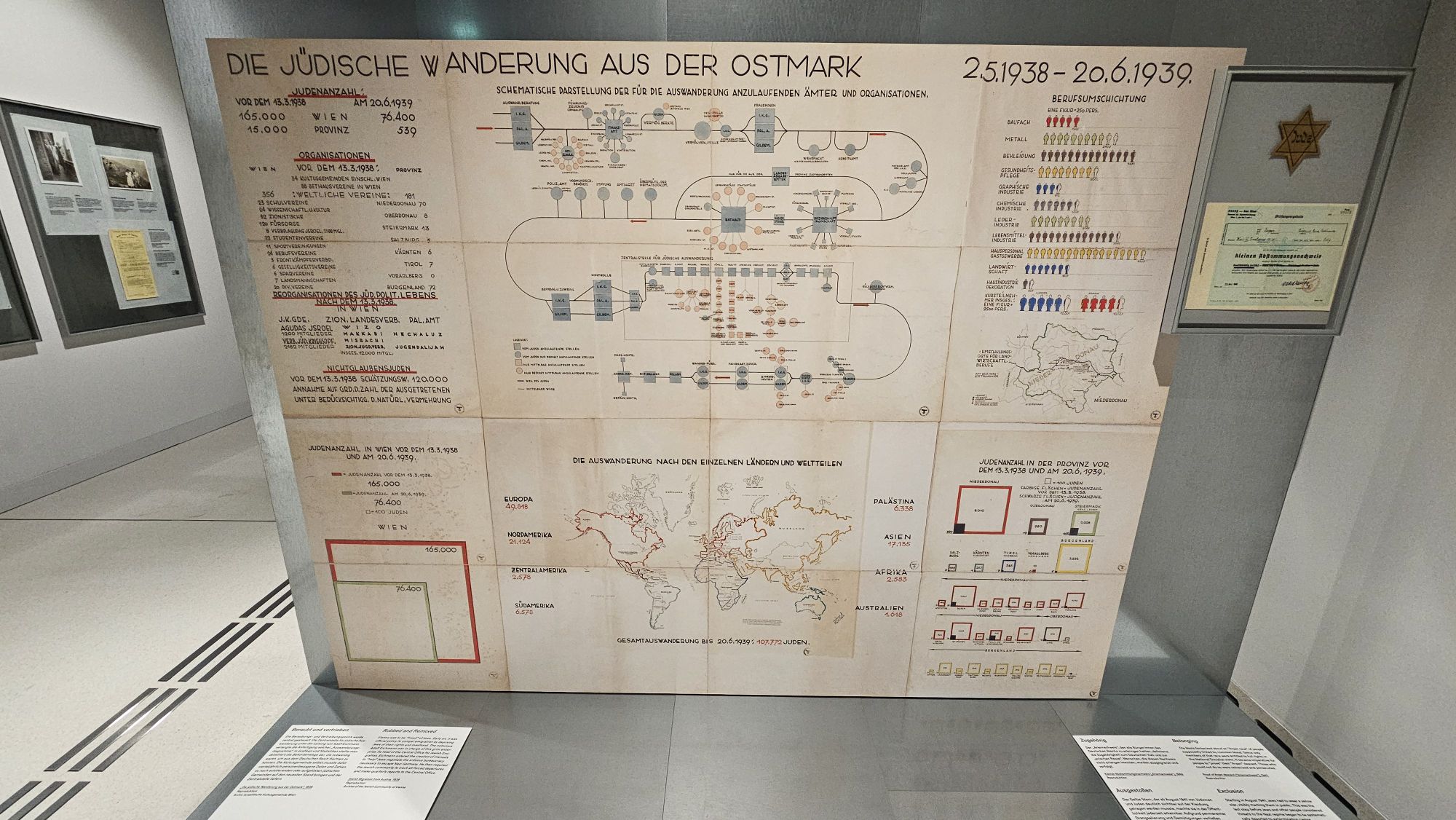
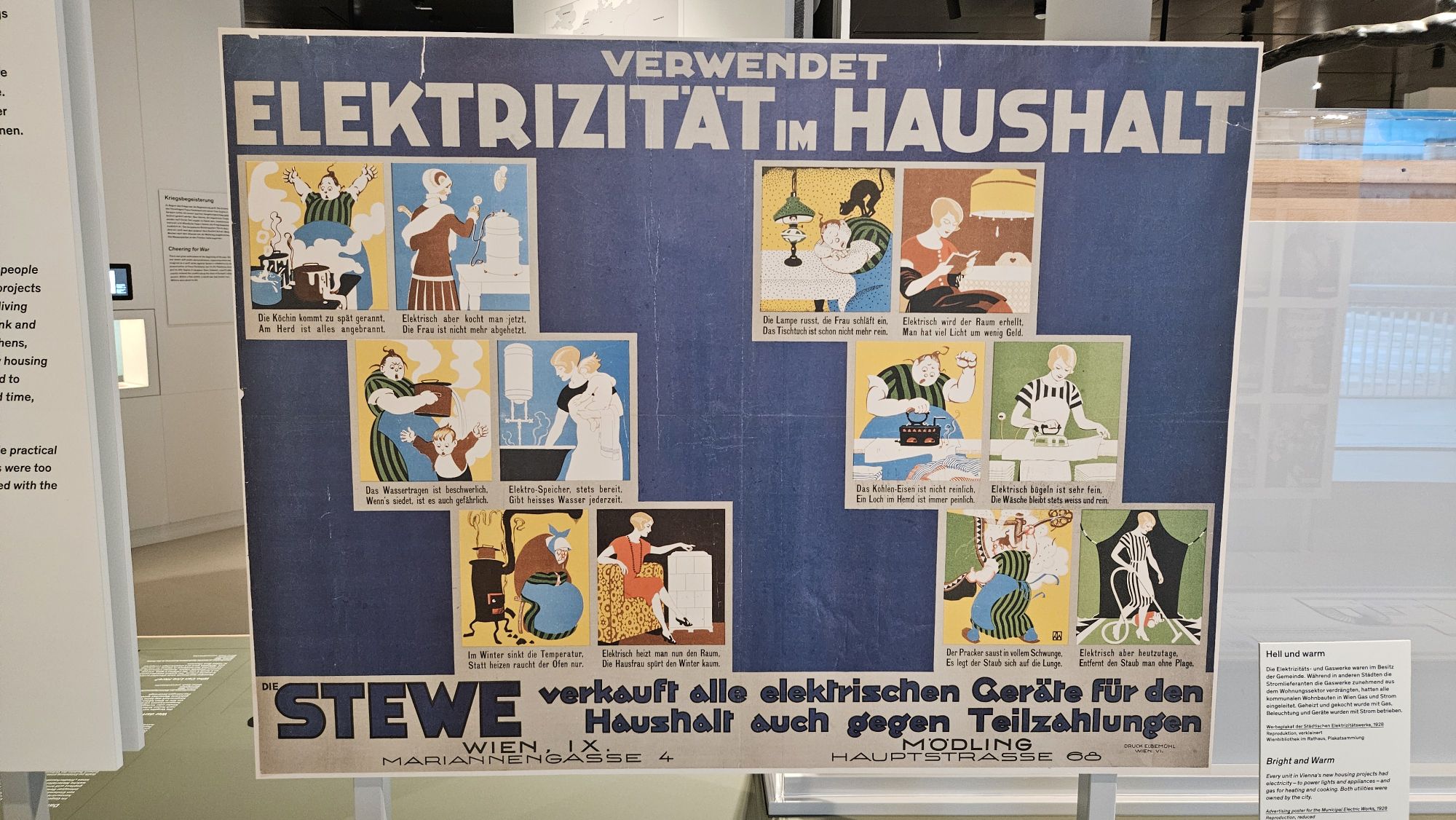
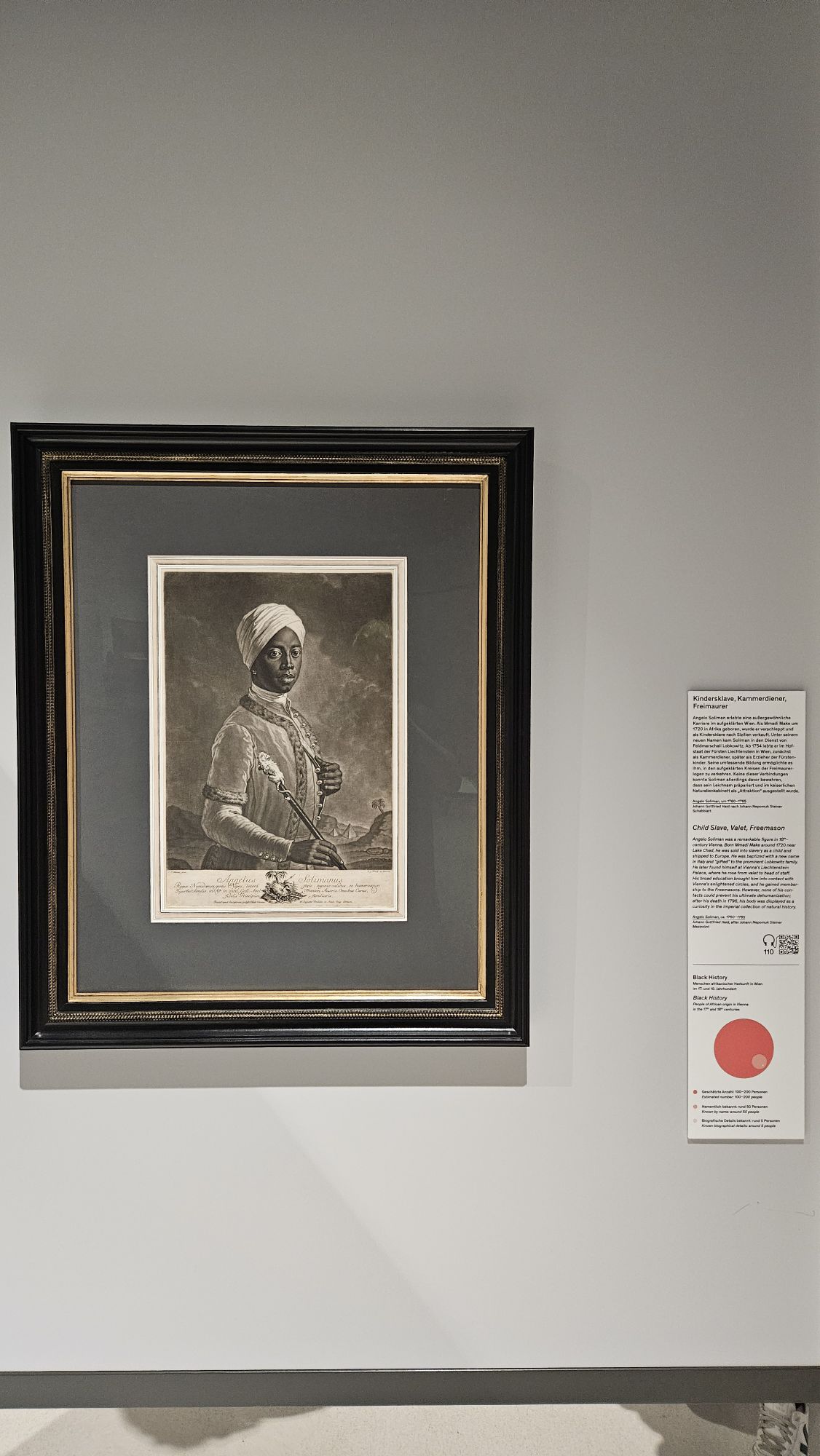
An excellent starting point is the Wien Museum, which offers profound insights into Vienna’s history from the 16th to the 20th century. The museum also pays attention to minorities and people on the margins of society — for example, one exhibit explores the lives of Black people in Vienna in the 18th century.
Soviet War Memorial
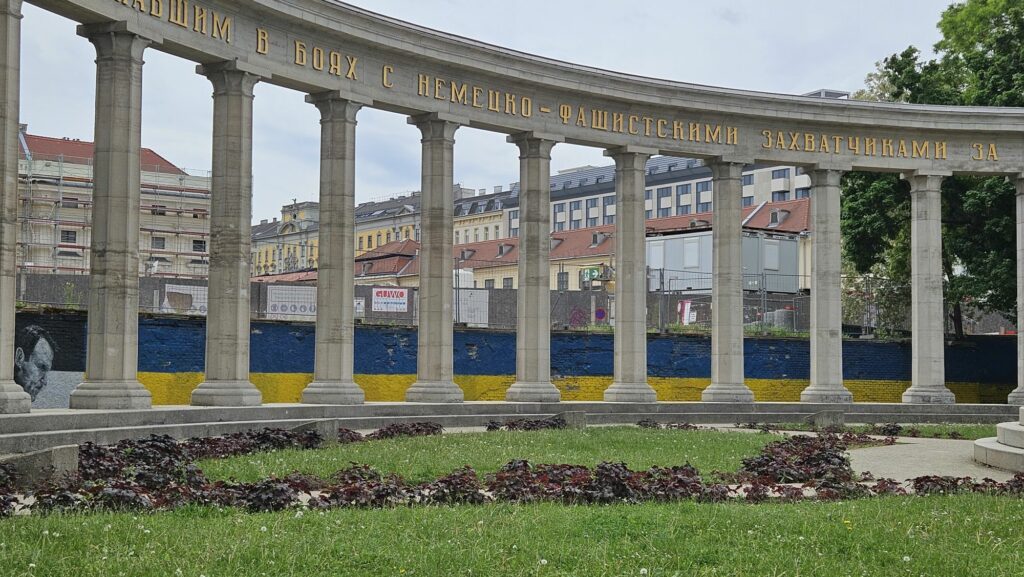
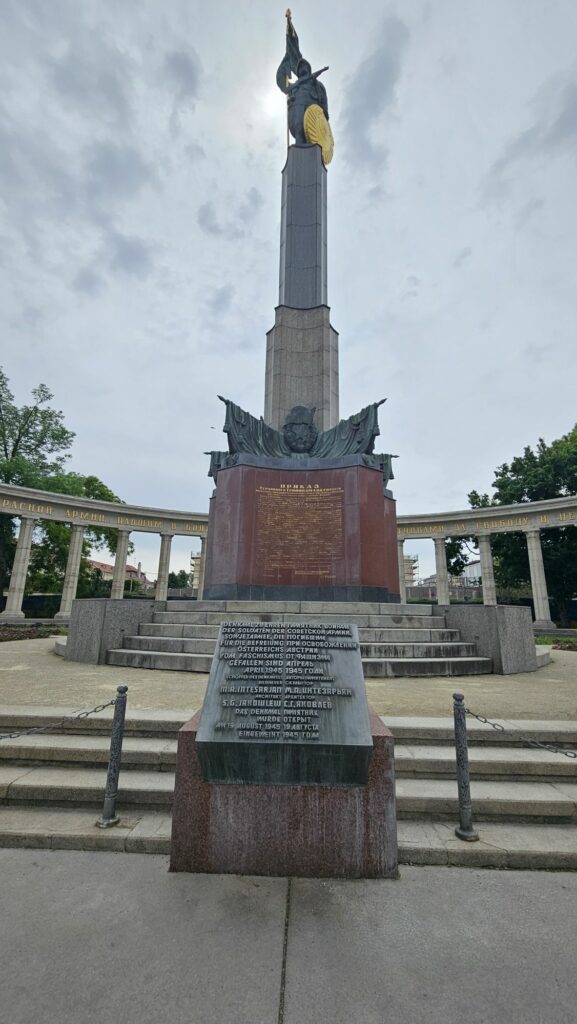
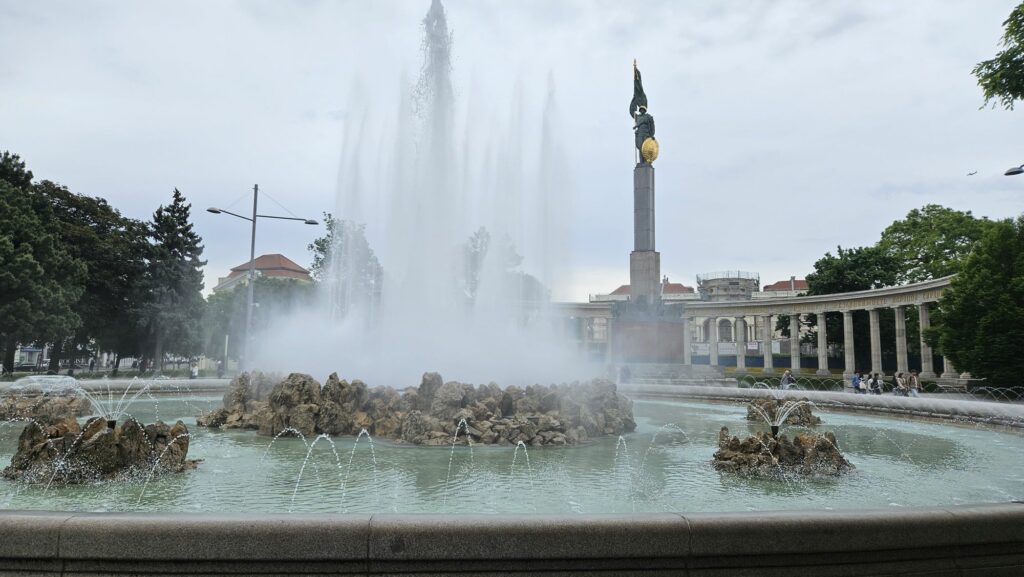
Close by is the Soviet War Memorial next to Hochstrahlbrunnen. Quite interestingly, the memorial had already been planned before the Red Army liberated Vienna, which explains why it was completed as early as August 1945. Today, the wall behind the monument is painted in Ukraine’s blue and yellow colors as a protest against Russia’s invasion of Ukraine.
Stadttempel Synogogue
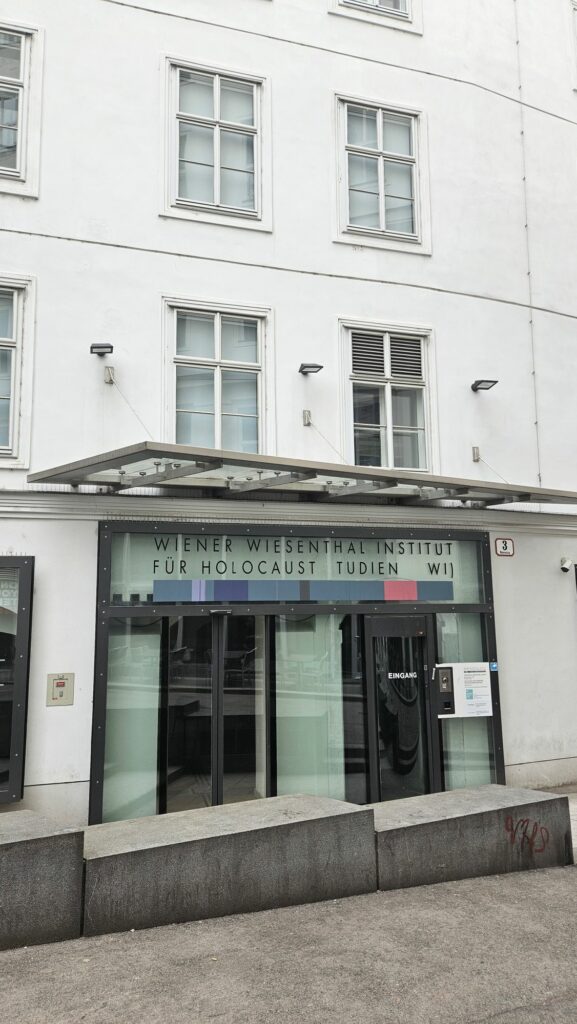
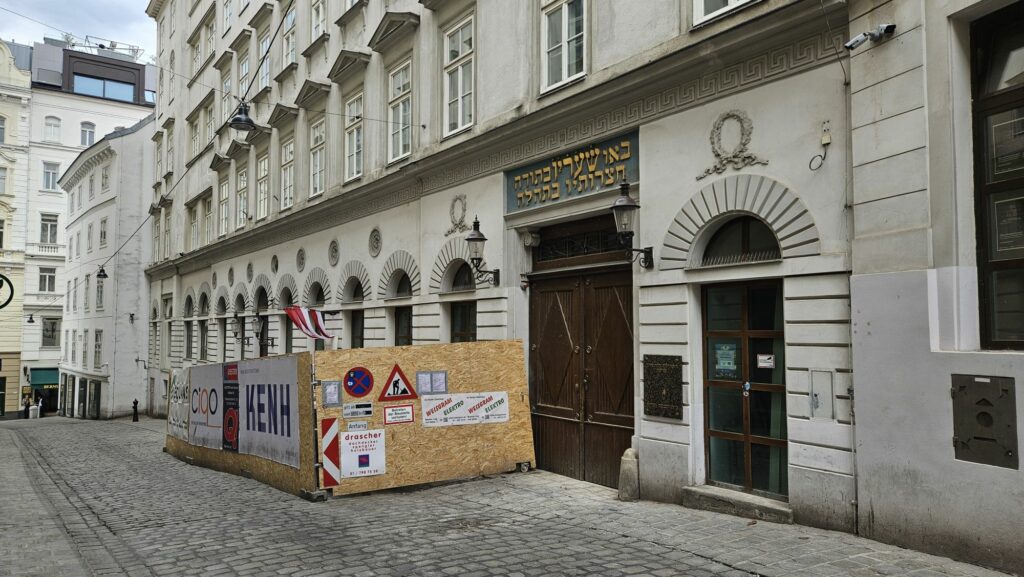
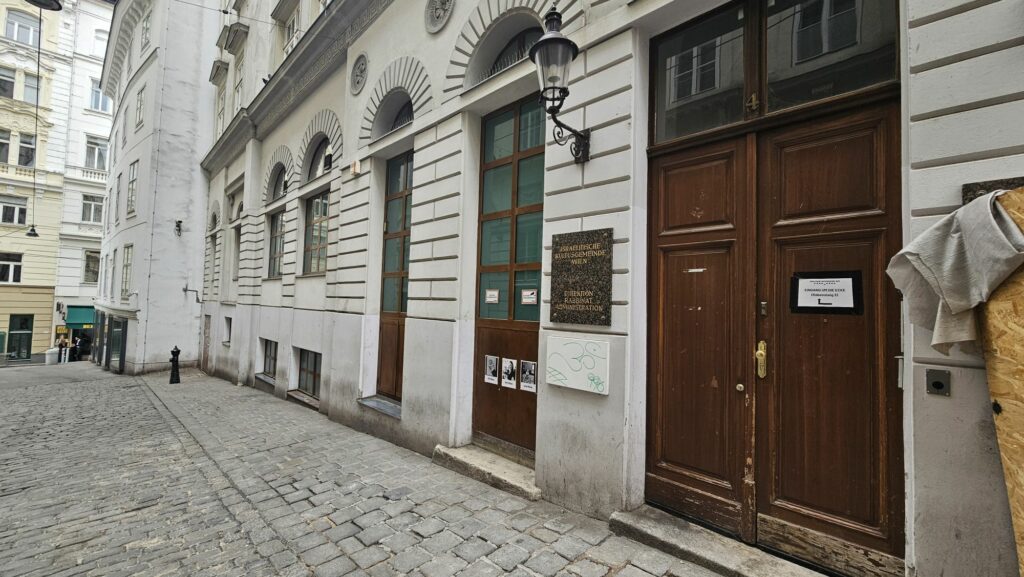
The Stadttempel is one of those places hidden in plain sight. During our visit it was being renovated ahead of its 200th anniversary. Built between 1824 and 1826, the synagogue reflects the restrictions of its era: non-Catholic places of worship were not allowed to face the street directly and had to remain inconspicuous. This explains why it is hidden behind ordinary residential buildings and can easily be overlooked from the outside.
Former Hotel Metropole
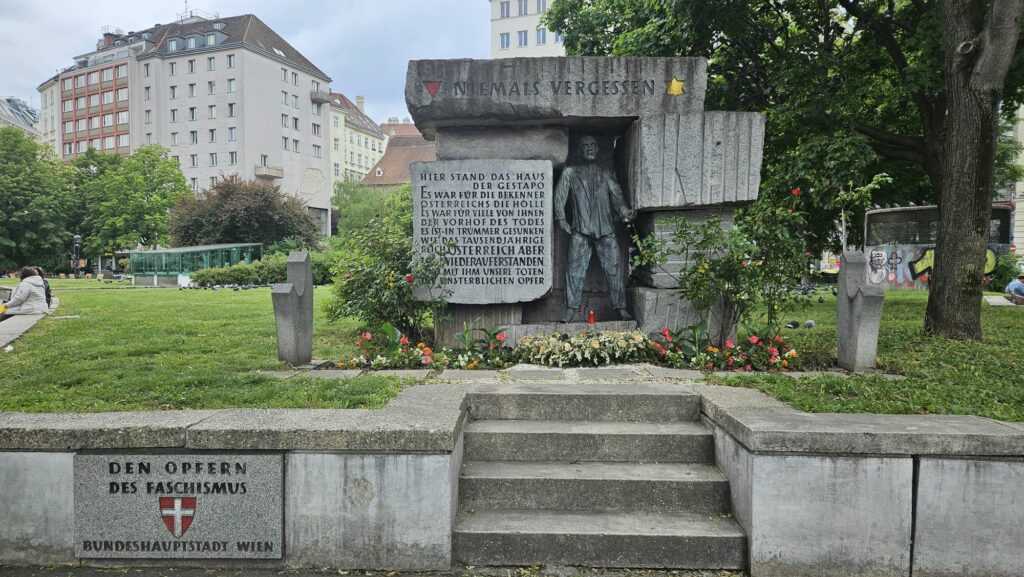
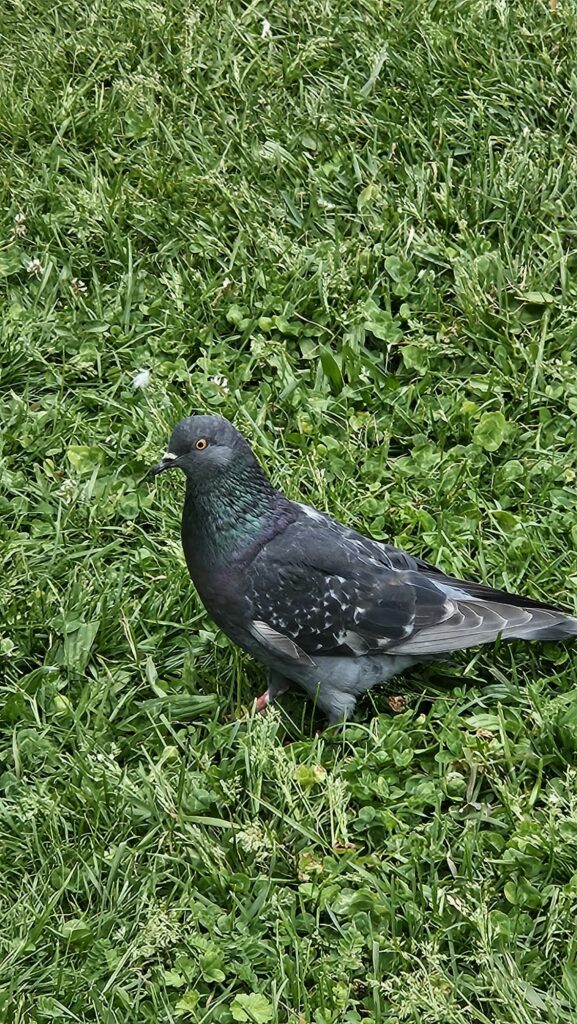
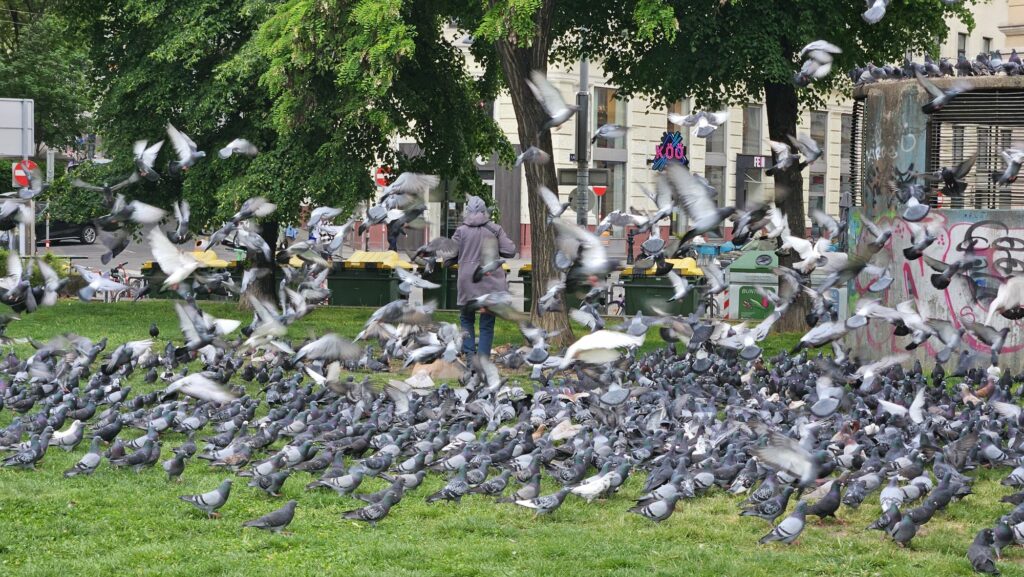
After Nazi Germany annexed Austria, the Gestapo confiscated the Jewish-owned Hotel Metropole at Morzinplatz and turned it into its Vienna headquarters. Thousands of people were interrogated and tortured there before being deported to concentration camps. Today, little remains of the former hotel. The site has been transformed into a grassy open area — we noticed plenty of pigeons on the grass — while a memorial on the square commemorates the victims of the Gestapo.
Hundertwasser Village and House
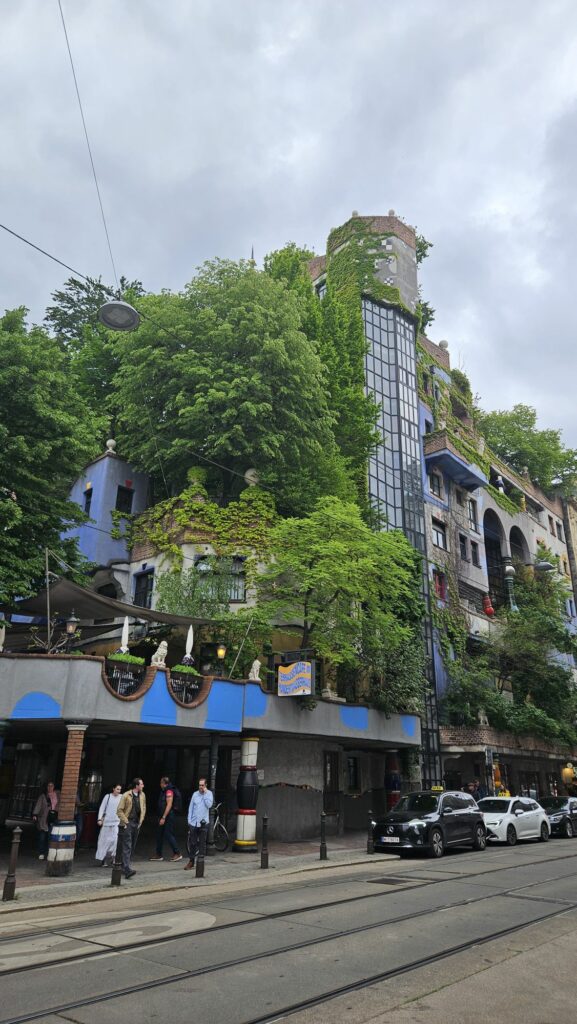
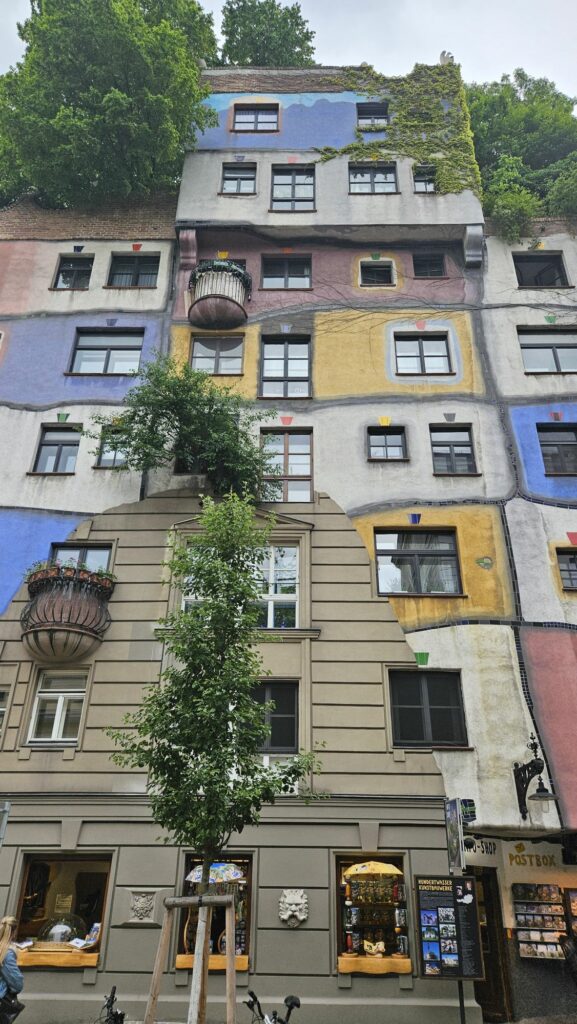
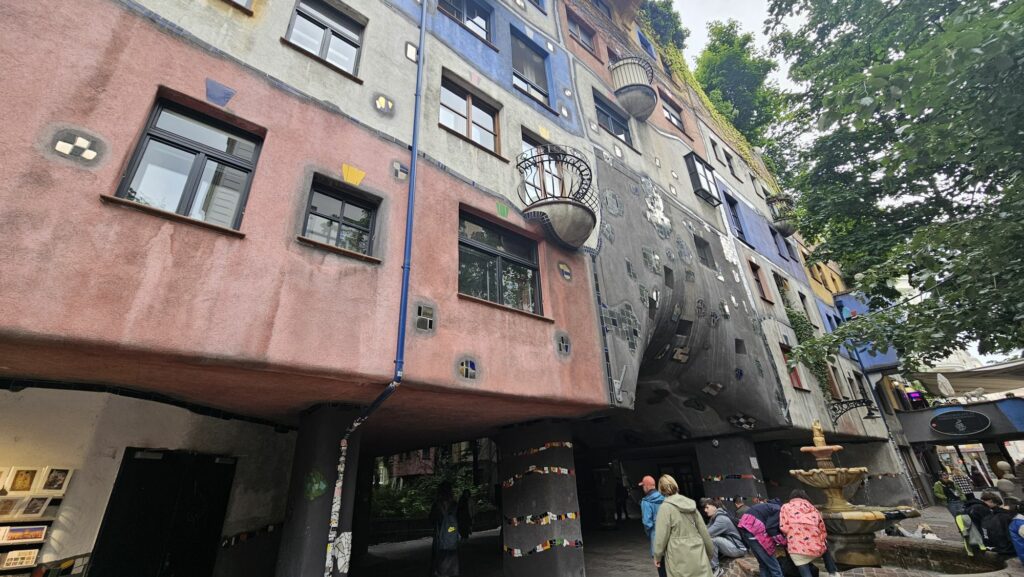
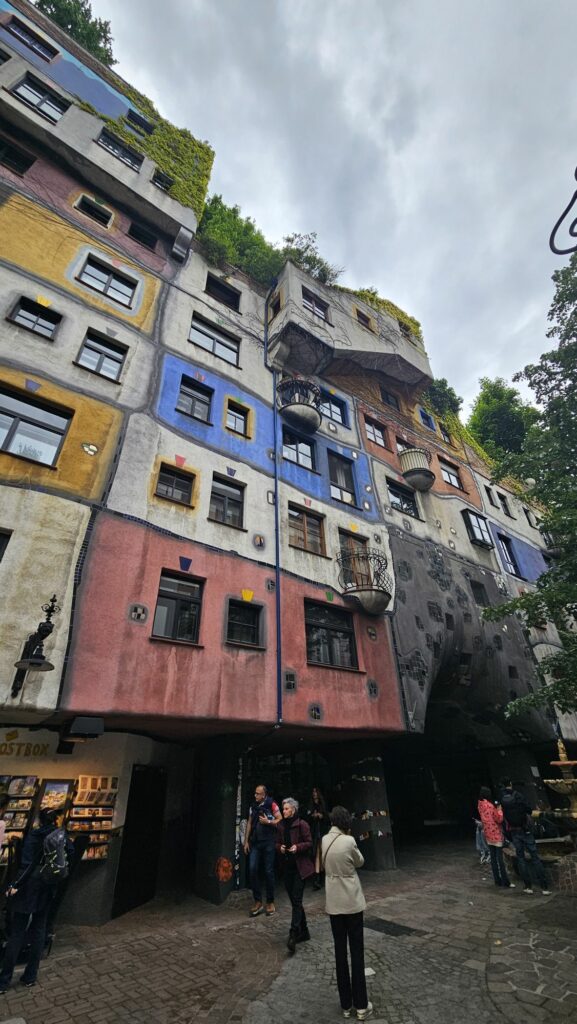
The Hundertwasser Village was built in 1990–1991 as a creative redesign of a former tire workshop opposite the Hundertwasserhaus. While the village serves visitors with shops and cafés, the Hundertwasser House itself has a different purpose: despite its fame and unusual architecture, it is an ordinary apartment building where regular tenants actually live.
Lutherische Stadtkirche
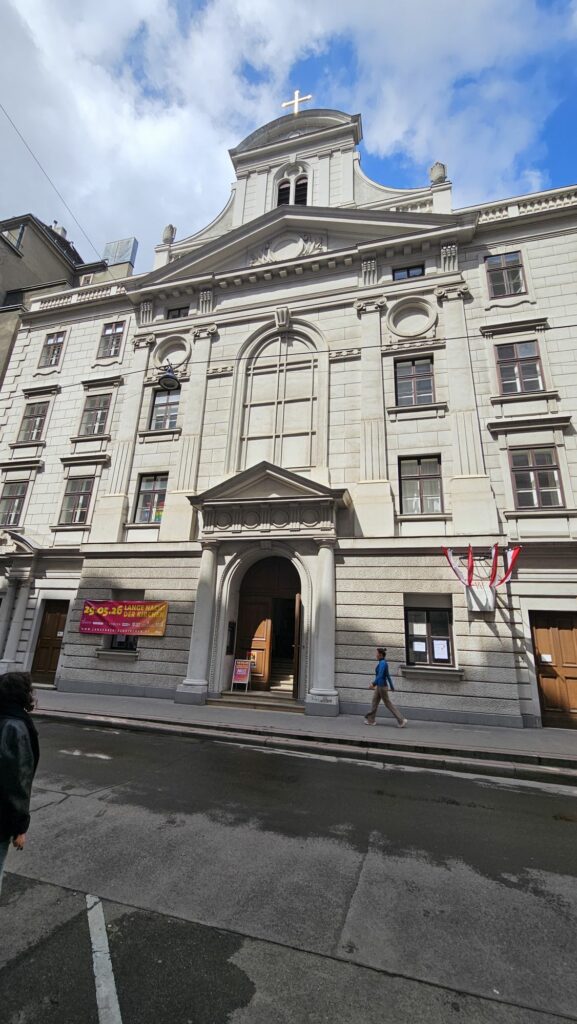
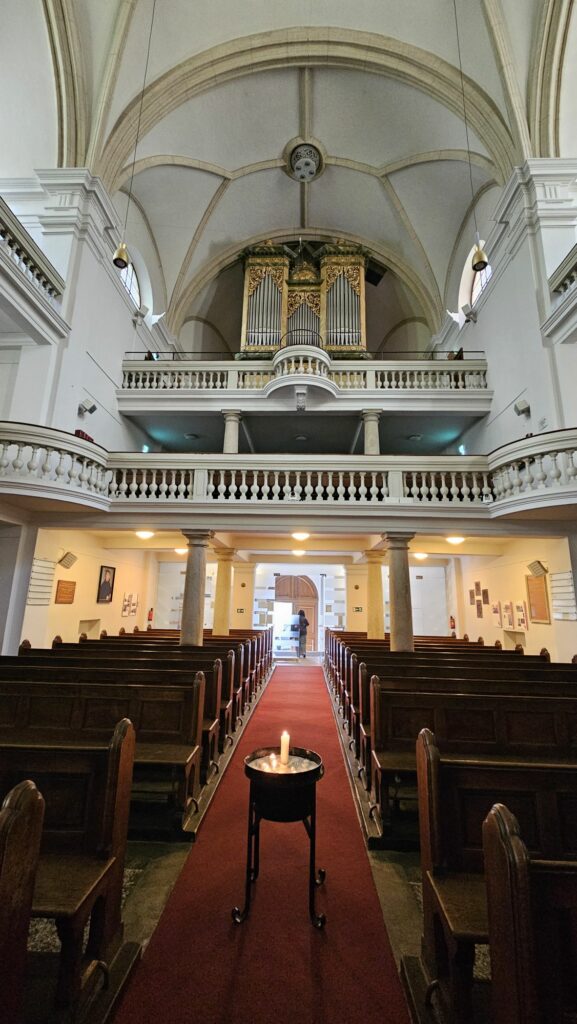
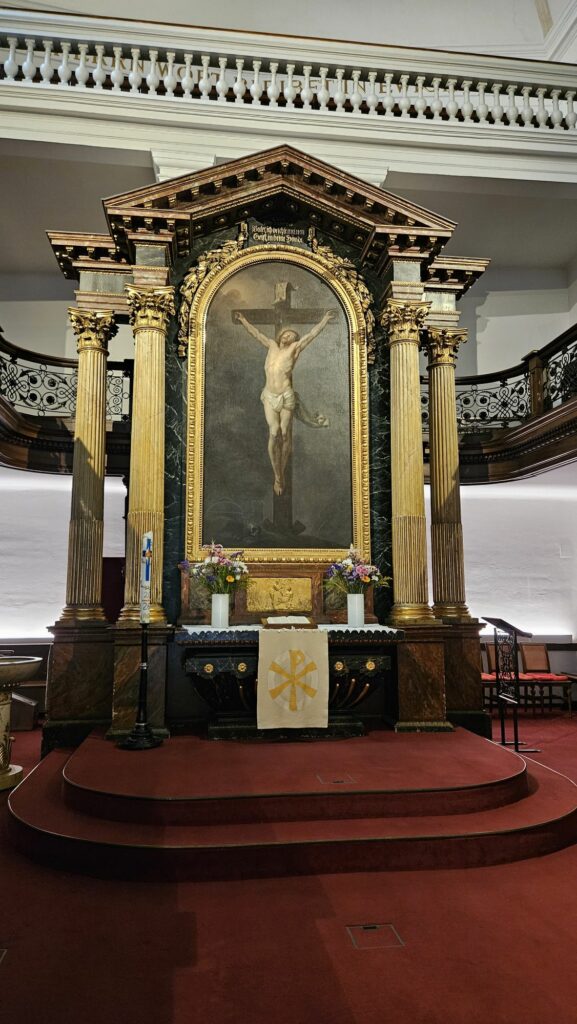
The Lutherische Stadtkirche (Lutheran City Church) was originally built as a monastery. Like the Jewish Stadttempel, it blends into the surrounding buildings and is not immediately recognizable as a church from the outside.
Jewish Museum of the City of Vienna
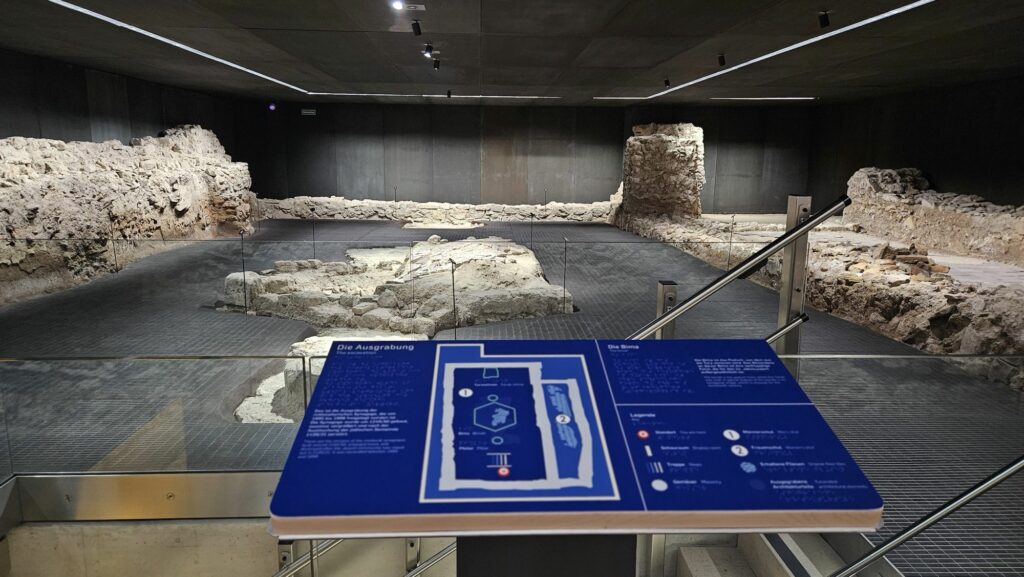
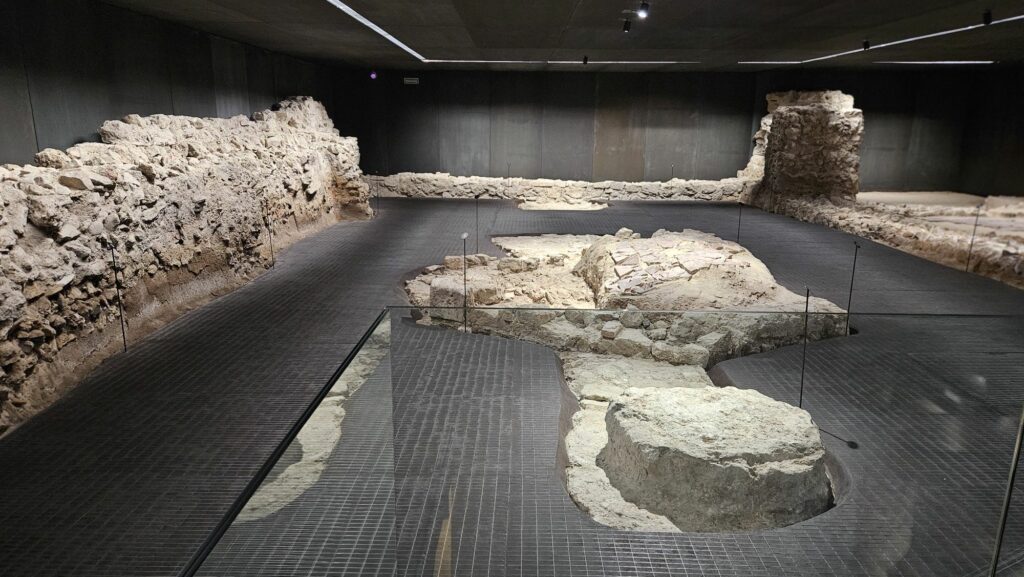
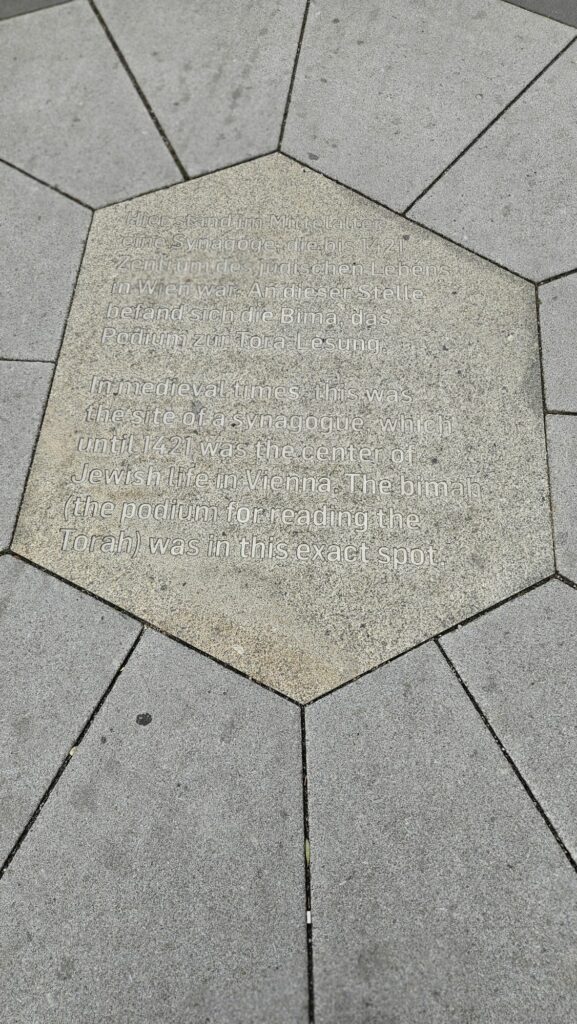
The Jewish Museum has two locations, and one ticket gives access to both. The museum on Dorotheergasse presents Jewish history in Vienna from the 16th to the 20th century. The second location, at Judenplatz (Jewish Square), focuses on the earlier history of Vienna’s Jewish community up to the Vienna Gesera — Gesera is a Hebrew word meaning decree or edict, and in this context refers to the persecution and destruction of Vienna’s medieval Jewish community in 1421. Ordered by Duke Albert V of Austria, the persecution resulted in expulsions, forced conversions, executions, and the destruction of the medieval synagogue and Jewish life in Vienna.
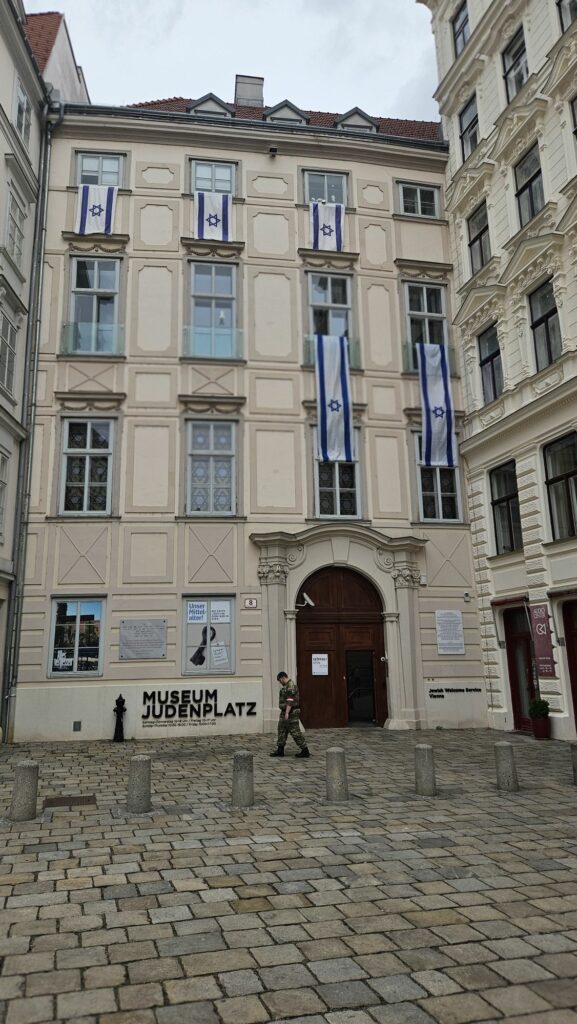
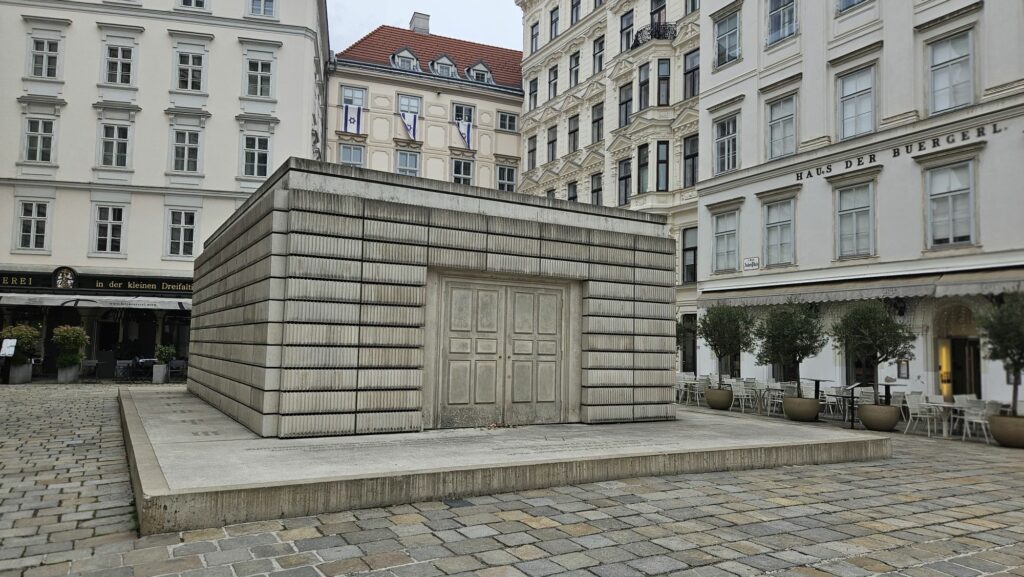
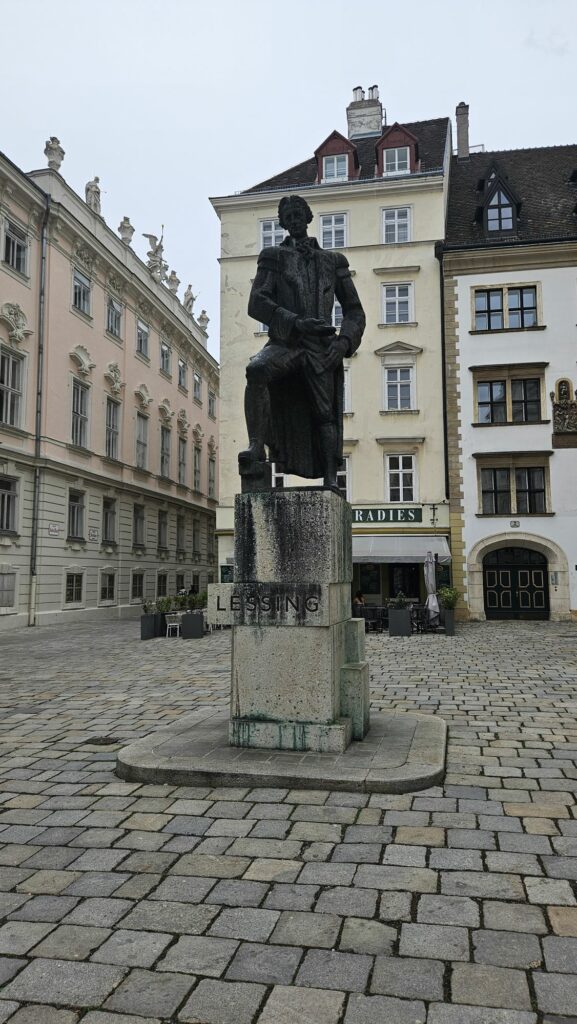
After the synagogue was demolished, Judenplatz remained largely an open space for a long period and was used for markets, fairs, and other public events.
The remains of the destroyed synagogue have been excavated and can be visited in the museum’s basement. Interestingly, the museum extends beneath Judenplatz itself, meaning that the archaeological remains lie directly underneath the square. Today, above the synagogue ruins preserved below stands the Nameless Library Holocaust Memorial, creating a powerful connection between Vienna’s medieval Jewish history and the memory of the Holocaust.
Opera
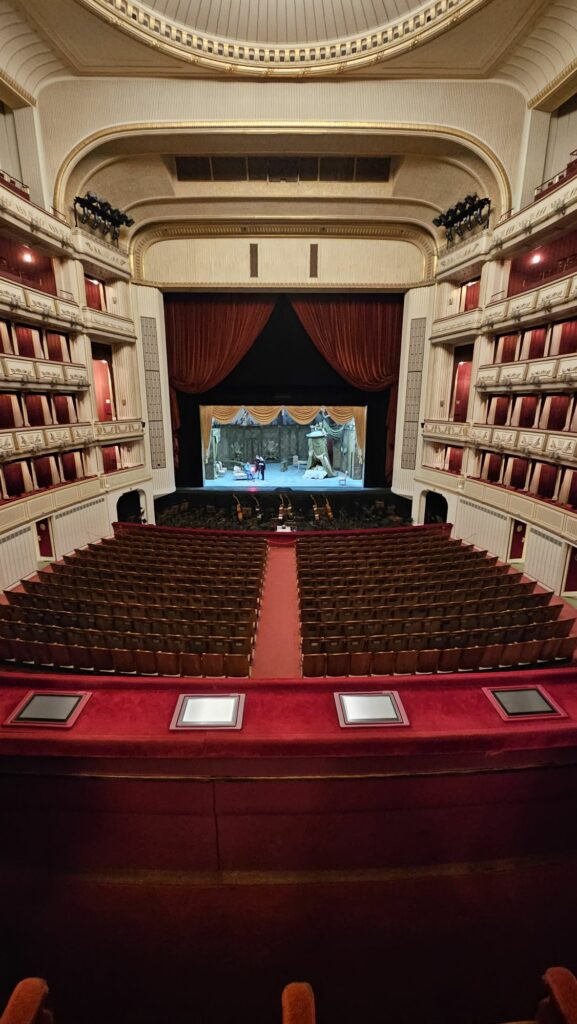
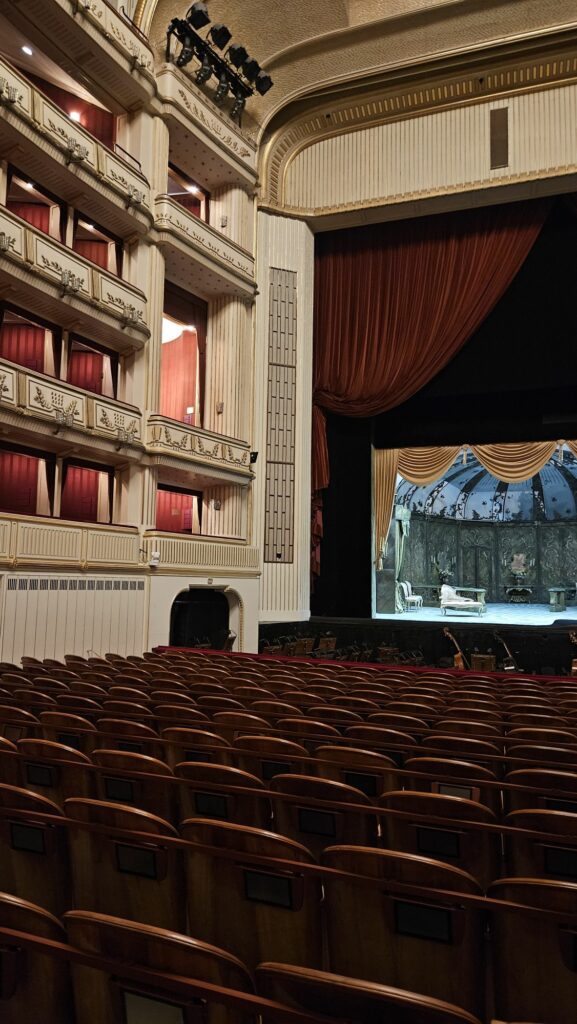
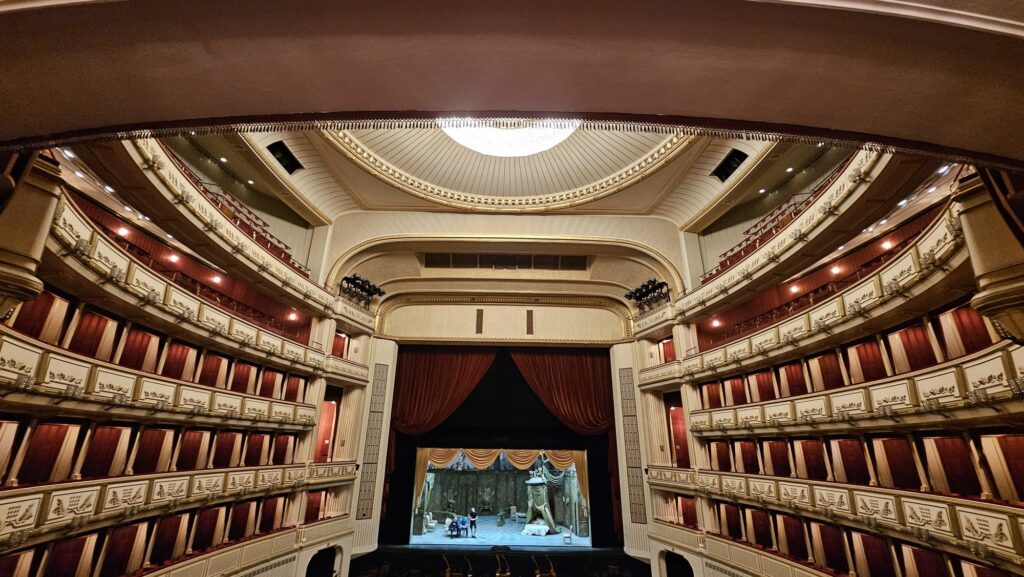
The Vienna State Opera can also be explored during the day through guided tours, which are best booked in advance. If you want to attend an evening performance, same-day tickets may still be available. Budget-conscious visitors can also opt for the famous standing-room tickets at the back of the opera house. (We did not try this ourselves, though.)
Remise – Transport Museum of Wiener Linien
This museum tells the story of public transportation in Vienna. Around 150 years of tram history are presented through original vehicles, beginning with horse-drawn trams, followed by steam-powered trams, and finally electric trams. The museum also highlights the lives of conductors and drivers, their working conditions, and the labor strikes that shaped the history of public transport. In its early years, public transportation was privately operated, and drivers sometimes had to work shifts of up to 19 hours a day. Working conditions improved after the system came under the control of the municipality of Vienna.
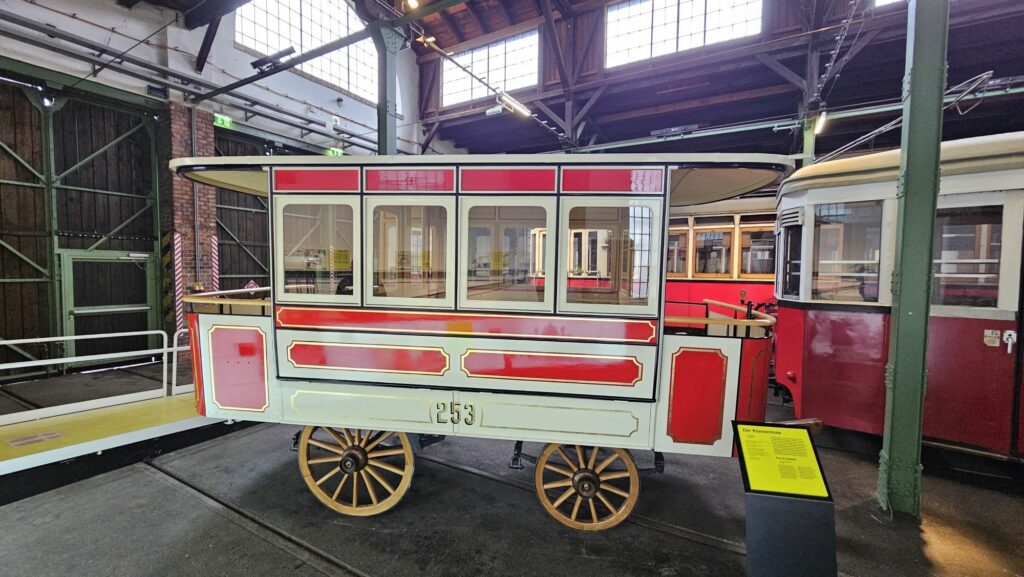
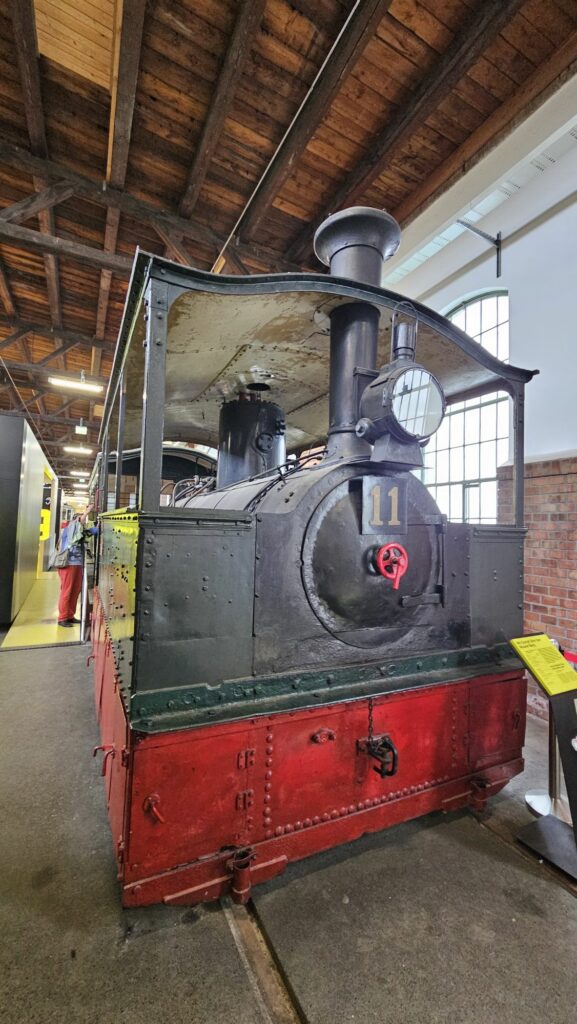
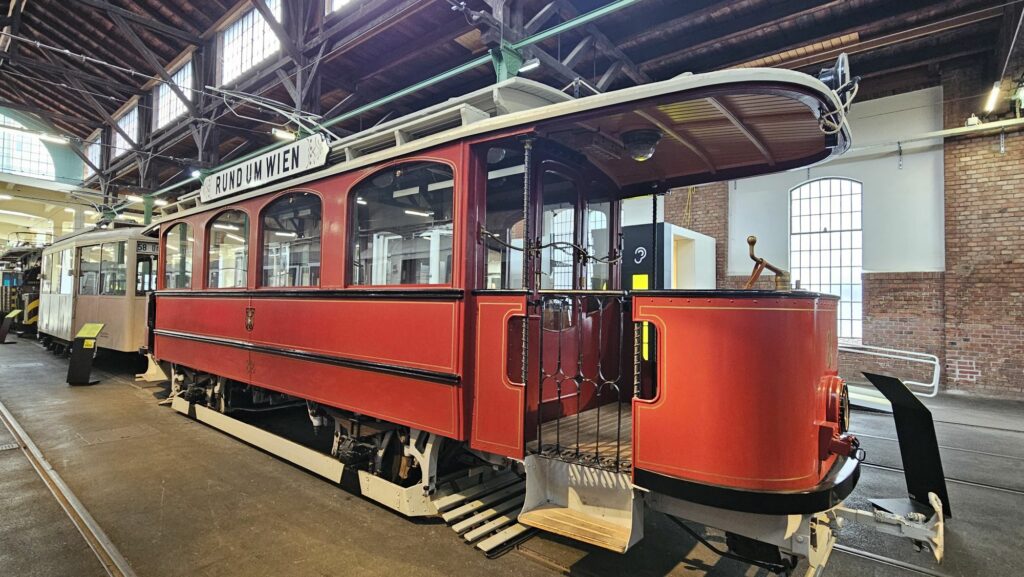
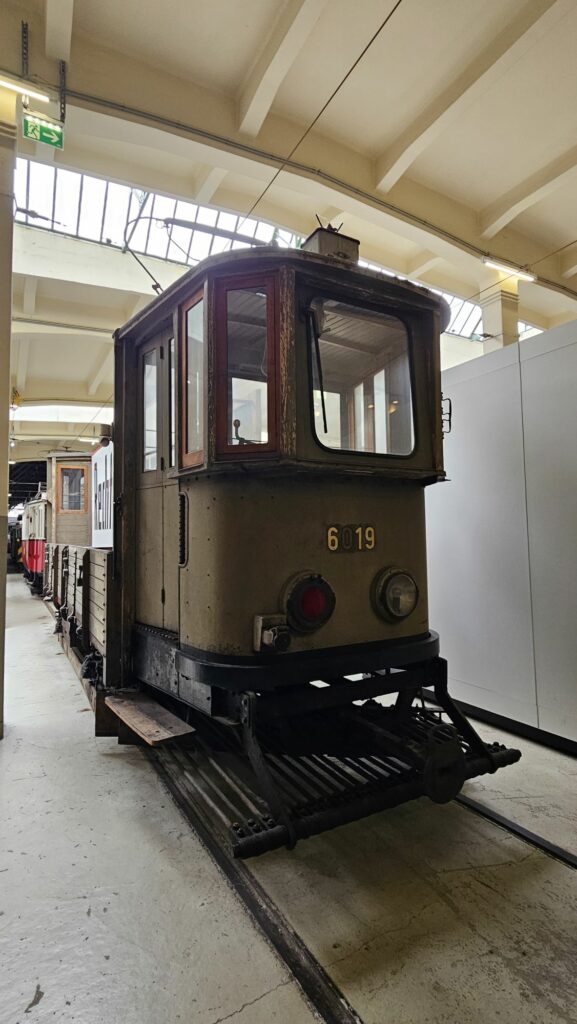
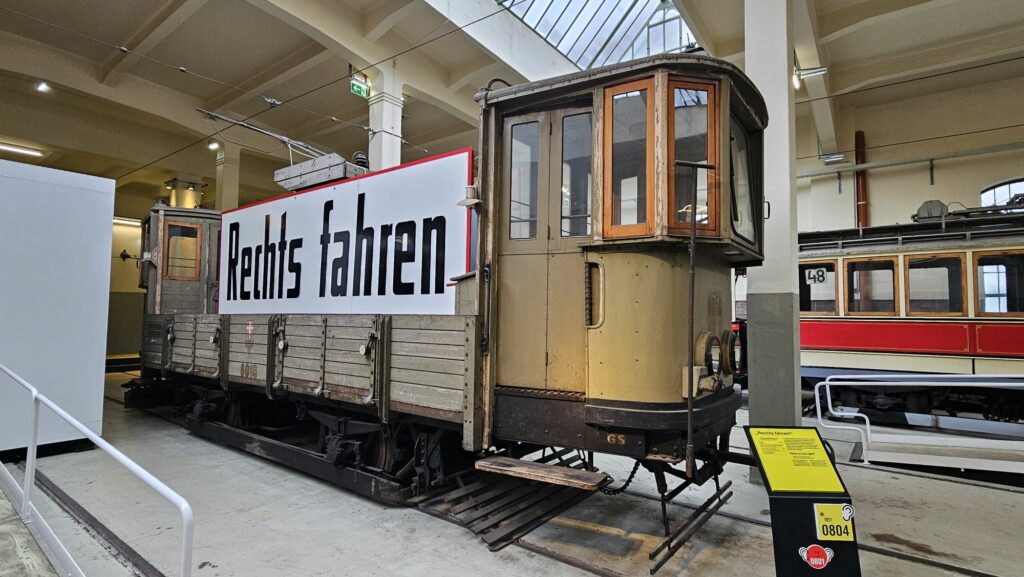
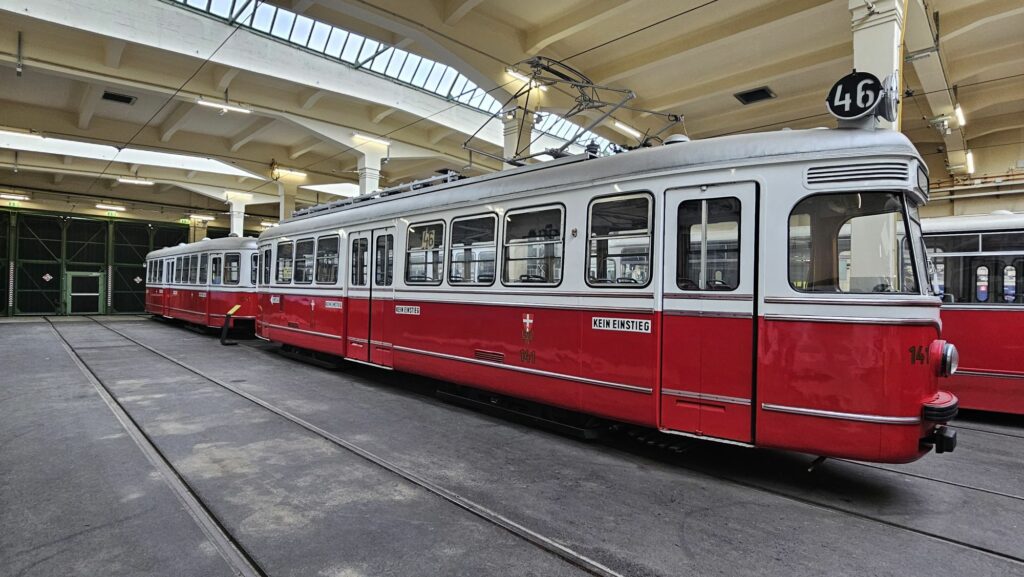
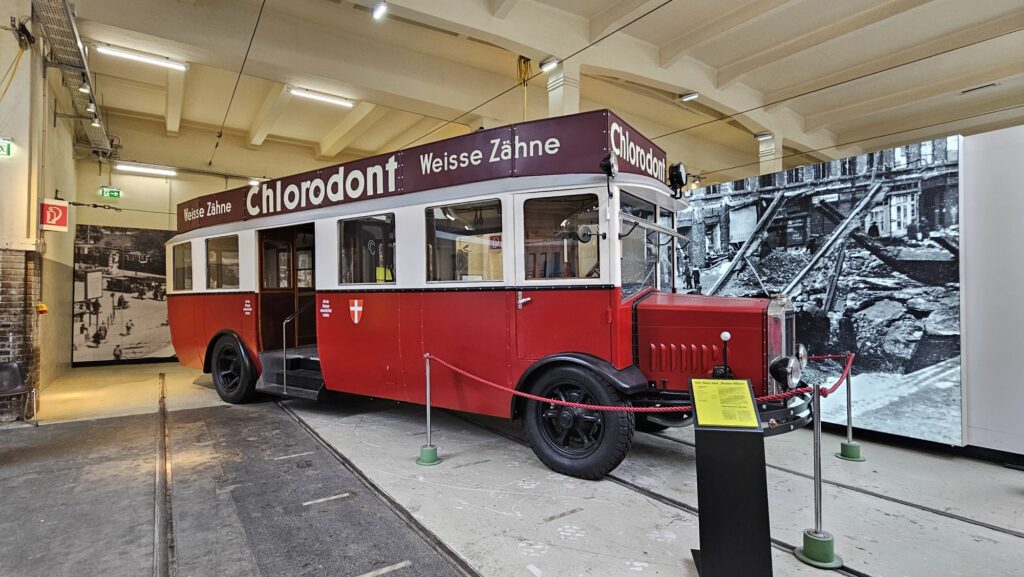
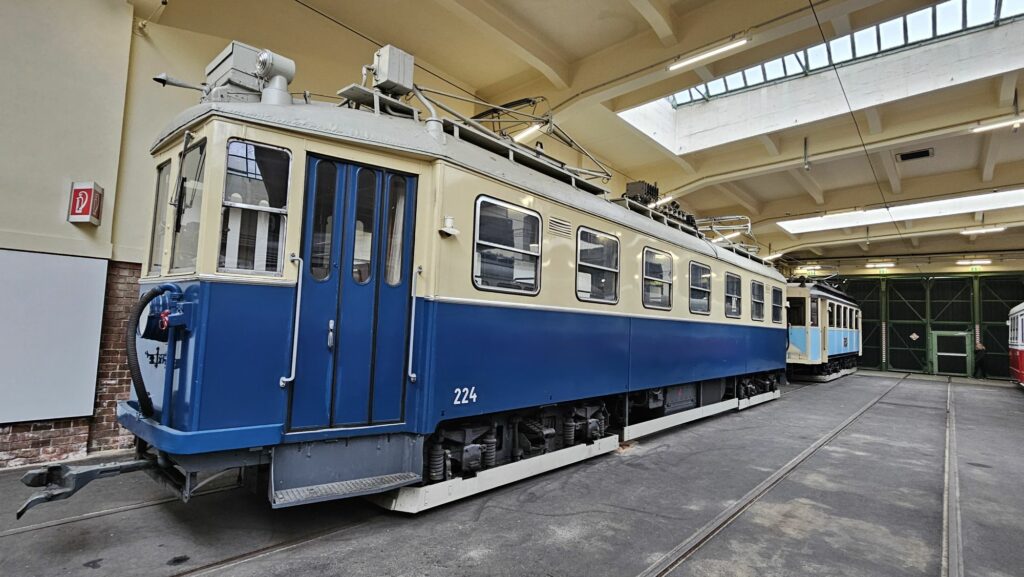
Also on display is a restored bus from a series built after World War I for Vienna’s public transportation system. It has right-hand drive because traffic in Vienna originally moved on the left. Although plans for switching to right-hand traffic had already existed beforehand, the change was implemented after the Nazi annexation of Austria.
Cafes and Restaurants
- Gasthof Schwabl Wirt: family run, typical Austian food, next to transportation museum
- Café Prückel
- Café Sperl
Leave a Reply